
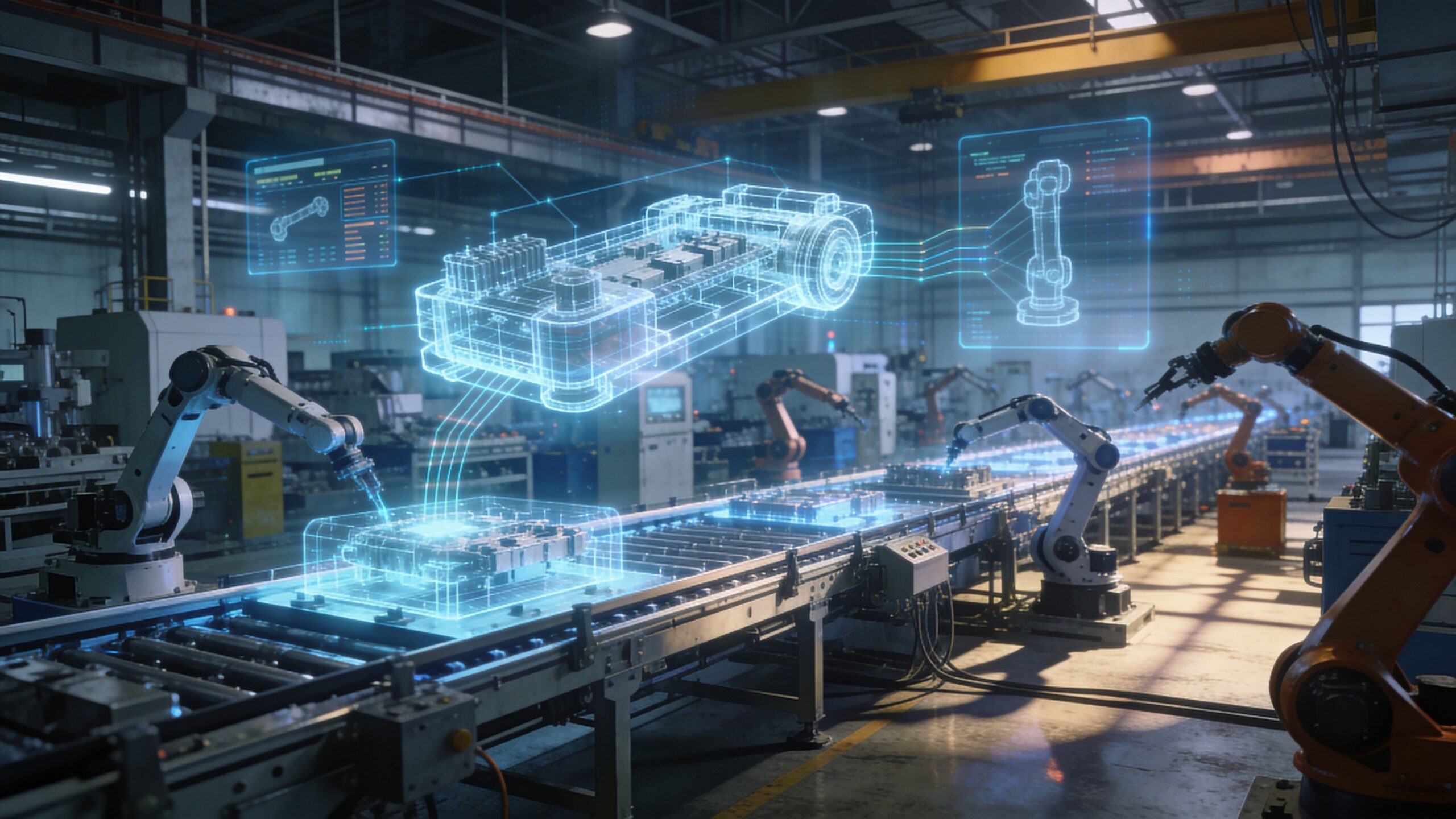
Artificial intelligence is ushering in a new era of innovation across the manufacturing industry, transforming factories into smarter, faster, and more adaptive production environments. Modern manufacturing is no longer driven solely by machinery and manual oversight. Instead, intelligent systems are increasingly guiding operations by analyzing enormous streams of data from sensors, robotics, and production equipment in real time. AI-powered tools can detect inefficiencies, predict equipment failures before they happen, and optimize complex production processes with remarkable precision. This shift is helping manufacturers reduce downtime, improve product quality, and respond more quickly to changing market demands. From advanced robotics and automated quality inspections to predictive maintenance and supply chain optimization, AI is enabling factories to operate with a level of intelligence and efficiency that was once impossible. As these technologies continue to evolve, manufacturers are building highly connected, data-driven production systems that learn and improve with every cycle. In this section of AI Business Street, we explore the technologies, strategies, and real-world applications that are reshaping modern manufacturing. These articles highlight how AI is helping companies design smarter factories, strengthen global supply chains, and drive the next generation of industrial innovation.
A: It is the use of intelligent software to improve production, maintenance, quality, and factory decision-making.
A: Common early wins include predictive maintenance, vision inspection, scheduling, and demand forecasting.
A: Usually no; it improves speed and pattern recognition, while people still handle judgment, safety, and process control.
A: Poor sensor data, weak integration, model drift, and overreliance on automation in live operations.
A: Yes; quality inspection, maintenance alerts, forecasting, and documentation support are practical starting points.
A: No; generative AI creates summaries and documentation, while predictive AI estimates failures, demand, or performance outcomes.
A: They often track OEE, scrap reduction, uptime, cycle time, labor efficiency, and maintenance savings.
A: Operations, maintenance, engineering, IT, quality, supply chain, and leadership should all be involved.
A: Not in every case; human review is important for safety, process changes, and high-impact plant decisions.
A: Start with one measurable problem, prove the value, refine the workflow, and then scale carefully.